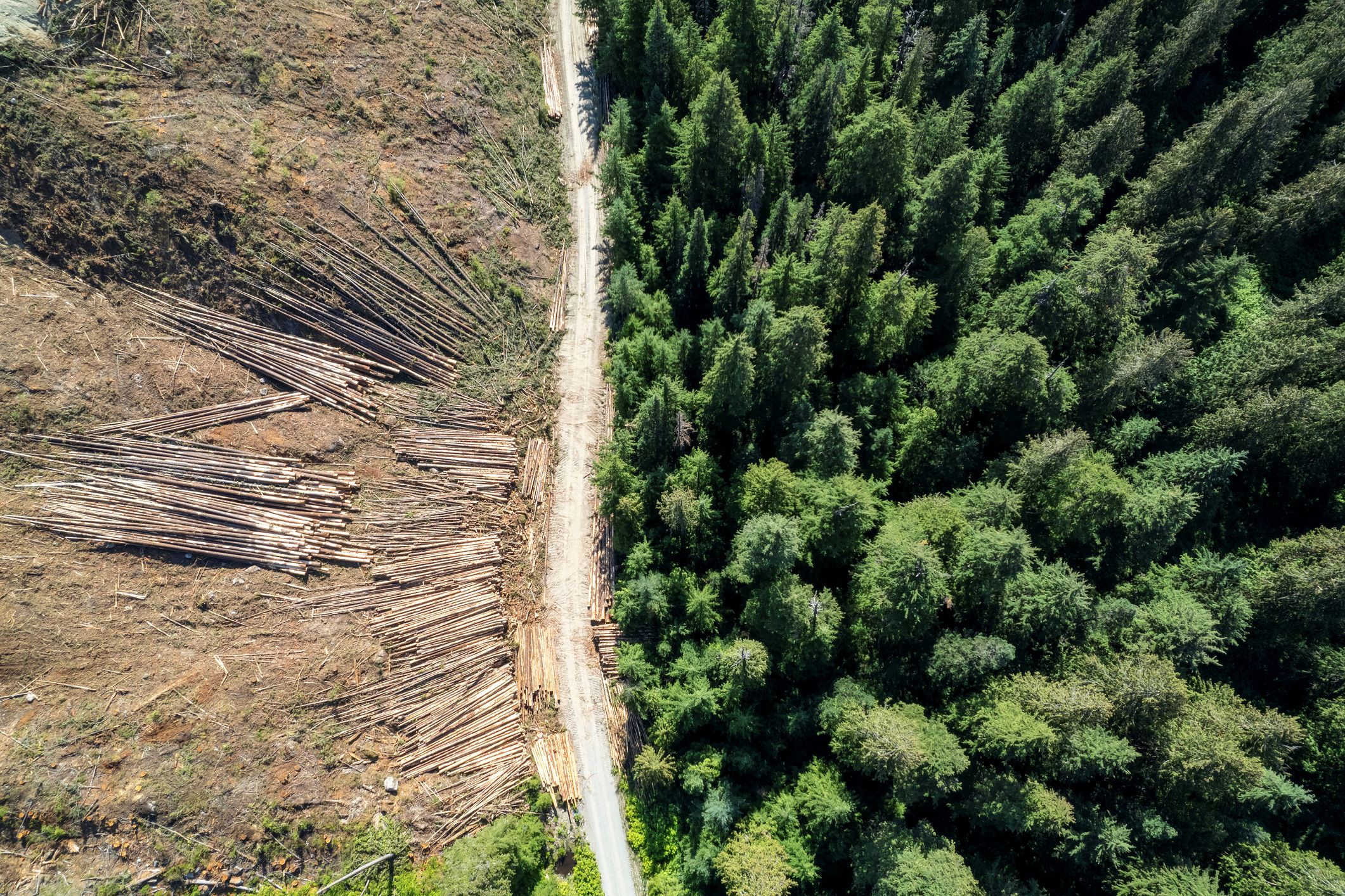
The Provincial Forest Advisory Council (PFAC) recently released its final report containing ten recommendations for shifting BC’s current volume-driven forestry sector to one that is anchored in “Land Care.” This concept reimagines our relationship with the land so that the land, instead of timber harvest volumes, is managed to better ensure the health of the forest ecosystems that sustain our economy and communities.
To realize Land Care, PFAC recommended transitioning to a regional area-based forestry management system, and specifically the enactment of legislation to establish new Regional Forest Management Areas (RFMAs) linked to “dynamic” and “forward-looking” management plans.
“The recommendations provided in this report are not just technical adjustments but a philosophical shift—placing the care of the land at the centre of decision-making and ensuring that decisions are guided by the needs of the land and its people.” – Provincial Forest Advisory Council, From Conflict to Care: BC’s Forest Future, p. 20
West Coast Environmental Law (West Coast) has long advocated for area-based management where those closest to the land and water play a key role in decision-making. Thus, in principle, PFAC’s recommendation to transition to a regional area-based management model has promise.
However, as West Coast indicated in our submissions to PFAC prior to the release of its final report, a successful transition to a new, more stable forest management system will require the right conditions for success. In particular, in discussions with PFAC we identified two essential “guardrails”:
- a law that prioritizes biodiversity and ecosystem health (BEH) in forestry decision-making (and across all resource sectors), and
- that the new forestry system align with the United Nations Declaration on the Rights of Indigenous Peoples (UNDRIP) as required by BC’s Declaration on the Rights of Indigenous Peoples Act (Declaration Act).
PFAC correctly indicates in its final report that the BC government cannot unilaterally shift to a regional area-based forestry management system, but that it is a constitutional imperative reinforced by the Declaration Act that this system be developed with Indigenous Nations and administered through co-governance frameworks. This proposed approach to reforming BC’s forestry system could be an opportunity to uphold Indigenous laws and legal orders with respect to land use and natural resource management within First Nations territories throughout the province and, as a result, is a potential pathway to aligning BC’s forestry laws with UNDRIP.
In addition, the regional area-based forestry management system proposed by PFAC could be an avenue through which we collectively prioritize BEH in forestry decision-making. Yet, we were disappointed that PFAC did not “connect the dots” more explicitly between its recommendations and the essential guardrails of BEH prioritization and UNDRIP alignment in its final report.
As discussed further below, BC has committed to co-developing with Indigenous Nations a BEH law that will legislatively prioritize biodiversity and ecosystem health across all resource decision-making. In other words, a BEH law would require that legal designations, objectives and standards be developed through ecosystem-based planning and applied to maintain healthy ecosystem conditions throughout the province.
Failing to ensure that this high-level land use planning direction is in place prior to transitioning to a regional area-based forestry management system risks leaving regional leaders without clear direction that management and planning for RFMAs must respect ecological limits. This could lead to inconsistent, and potentially adverse, environmental outcomes in some areas, which would undermine PFAC’s stated purpose for a regional area-based forestry management system, namely Land Care.
PFAC’s report comes more than five years after the release of the Old Growth Strategic Review (OGSR) and more than two years since the public engagement period on BC’s Draft BEH Framework closed. The OGSR identified the need for a paradigm shift in how BC’s forests are managed and notably recommended, among other things, the enactment of legislation that legally establishes the biodiversity and ecosystem health of BC’s forests as a priority in government decision-making across resource sectors (one of the essential “guardrails” noted above). The OGSR made this recommendation after finding that, under our current forest management strategy, much of BC, especially the areas covered with productive forest, will be in a high biodiversity risk situation in the near future.
In November 2023, the BC government signalled its commitment to implementing the OGSR’s recommendation to legally prioritize the biodiversity and ecosystem health of BC’s forests by releasing its Draft BEH Framework. The government indicated in the Framework that it would co-develop with Indigenous Nations a law that would prioritize BEH across resource sectors, and outlined certain components that the law would contain to achieve this end. A significant component was the development of BEH objectives and standards for different ecosystems, including forests, that are anchored in the best available Western and Indigenous science as well as local knowledge to ensure these objectives and standards are ecosystem appropriate.
The government received close to 8000 mostly positive submissions on its Draft BEH Framework from a diversity of voices, but despite this immense input, the Framework unfortunately remains in draft form with no indication as to when it will be finalized or when corresponding BEH legislation will be introduced.
PFAC had an opportunity in its final report to advance the implementation of the OGSR and BC’s subsequent Draft BEH Framework by explicitly recommending that a new BEH law be enacted to give effect to the paradigm shift set out in these policy documents, as this paradigm shift would support the realization of “Land Care” in BC’s forest sector. However, PFAC did not explicitly recommend that a BEH law be enacted, although it does say that the recommendations contained in its final report are “pathways” for implementing the OGSR recommendations, which would include the recommendation calling for the enactment of a BEH law.
In West Coast’s view, the enactment of a BEH law is the pathway – indeed a key prerequisite – for effectively implementing PFAC’s proposed regional area-based forestry management model. For example, a BEH law could guide the development of RFMA management plans by requiring that these plans be anchored in ecosystem-based management, and by requiring that ecologically-relevant BEH objectives and standards be set to better ensure that the management of BC’s forests occurs within their ecosystem limits.
In the absence of a biodiversity and ecosystem health law, BC risks inhibiting rather than advancing the goal of transitioning to a more sustainable forest management system. To better ensure the success of this transition, it is essential for the BC government to follow through on its stated commitment to co-develop with Indigenous Nations a BEH law to maintain and restore the health of the ecosystems that sustain our economies, communities, cultures and ultimately, life itself.
Top photo: AscentXMedia via iStock